Welcome to WordPress. This is your first post. Edit or delete it, then start writing!
Blog
-
The Best Car Seat Travel Bag
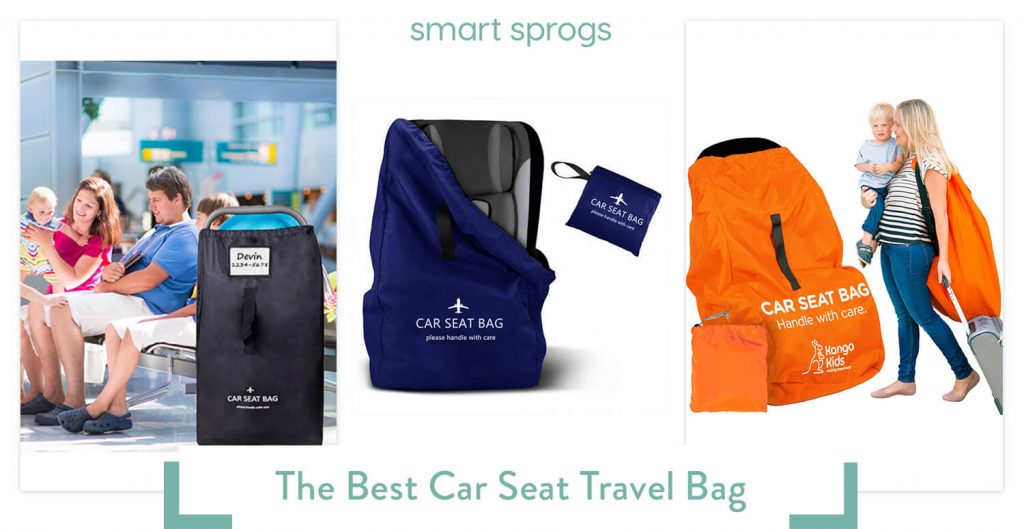
Which is the best car seat travel bag – a shopping guide
How to carry a car seat on a plane trip is a big question for anxious parents travelling with a baby for the first time.
A car seat storage bag that is protective and easy to carry is an awesome tool for happy and calm holidaying with a young family. Here are our top picks and recommendations for the best car seat bags for air travel.
Why is a travel easy car seat bag a good idea?
A car seat backpack is a wonderful way to make travelling with babies and toddlers a little less stressful.
- Babies will sleep better and be more settled if they are in their car seat during a flight.
- Taking your child’s car seat on a trip will be comforting for them and give you the reassurance of using the car seat you trust in a hired car.
- Carrying a car seat on your back or over a shoulder will leave your hands free to push a pushchair or chase after an excitable two-year-old.
- Car seats are expensive and protecting it with a durable cover while it is travelling through airports and in the hold of the plane is important. No-one wants to arrive at a beautiful beach resort to find that the car seat is damaged and unusable. A Maxi-Cosi car seat travel bag may save you from having to replace a £250 car seat!
- Insurance claims, especially those against airlines and airports, are an almighty faff!
- The bag will hold other useful items that you wouldn’t normally have room for.
- Many airlines insist that a car seat travels in an approved case.
Features to look for in car seat travel covers
- Lockable zips – for peace of mind and security.
- The colour – a bright colour will make it stand out on the luggage belt.
- Easy to fold up and stash in an overhead locker if you’re using the seat during the flight. Padded car seat covers can be cumbersome so keep this in mind when choosing.
- Wheels – a great option if you would struggle to physically carry the bag and are not on your own with your child.
- Adjustable straps – make sure you and your partner will both find carrying it easy and pleasant.
- Backpack style – choose a backpack car seat bag for the ability to carry it on your back.
- A comfortable fit – look for padded straps and cushioning in the places where it will sit on your body.
- Airline approved sizes, straps and zips.
Airline rules and regulations
Airline approved car seat covers and car seats are usually listed on their main website. Here’s a list of the usual guidelines but never assume, if in doubt, check!
For use during the flight:
- The car seat must not be larger than the dimensions of the aeroplane seat.
- The lap belt must be enough to secure the car seat to the plane seat.
- It must have a five-point harness to keep the child safe.
- You will need to keep it in place throughout the flight.
For placement in the hold:
- The straps should either tuck away or be removable.
- Be within the size guidelines for the individual airline.
- You’ll need to pay an extra baggage fee.
-
The Best Teething Powder and Gel to Relieve Your Baby From 3 Months Onward
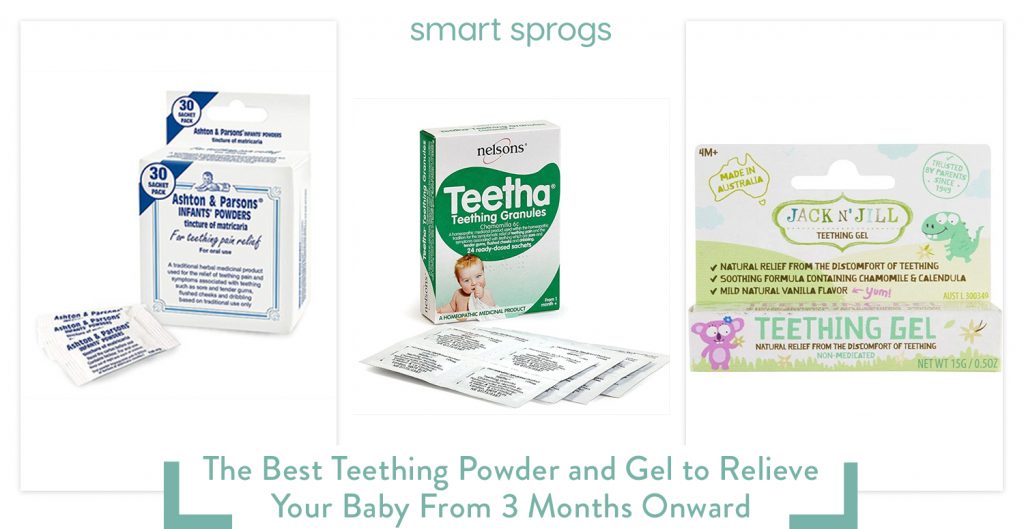
Teething can be a distressing time for babies and their loving parents. It’s a completely natural and vital process that every human goes through, but teething symptoms will still cause pain and discomfort.
Happily, we’re here to help! Our guide will help you cope by providing teething tips for pain relief, it will answer the question of when do babies teeth and provide recommendations for the best teething gel for baby.
Choosing the correct teething treatment for your baby
There are lots of teething remedies out there, all promising to make your little one a little less sad. From teething gel to powders and granules, here’s our pick of the best.
Baby teething powder or teething gels – which is the best teething medicine?
Which is the most effective treatment for teething symptoms in babies? Teething powder or teething gels? Most Mums and Dads simply use the teething relief that has been recommended by family and friends but here’s a quick guide to the differences and how they should work.
Teething powders/ Teething granules
The best teething powder should do the following:
- Dissolve quickly
- Taste nice
- Be effective
- Contain only natural ingredients
- Be sugar free
Teething powder for babies come in sachets with small amounts of powder that should be spooned or poured into your baby’s mouth. They will provide pain relief and/or have a numbing effect.
Teething aids in the form of gel
A good teething gel needs to have these attributes:
- Fast and reliable pain-relieving properties
- Be sticky enough to stay in place without feeling unpleasant
- Tasteless or with a pleasant flavour
- Be sugar free
- Contain under 1% of Lidocaine (the active ingredient)
When do babies start teething?
We say this frequently, but all babies and children are different, so the answer to ‘When does teething start?’ is an approximation.
Seeing the first symptoms of teething at 3 months is quite usual but the first tooth won’t pop through until around 6-months of age.
The last tooth will have appeared by 3 so, potentially, that’s quite a few days and weeks of cutting teeth to suffer in your child’s first years. That’s why it’s important to learn how to help a teething baby.
Signs of teething in babies
The signs of teething can appear as early as 8 weeks but it’s normally at 12 weeks plus. Here’s a list of the main baby teething symptoms to look out for:
- One of the first sign of teething is lots of drooling so buy lots of bibs!
- Biting and gumming on EVERYTHING! They do this because the counter pressure gives relief
- Red cheeks
- Waking up at night
- A baby teething will feel grumpy and irritable so prepare yourself for more crying and temper tantrums than usual
- Red gums
- Being off their food
- Ear rubbing – one of classic signs baby is teething but if it continues check that it isn’t the symptom of an ear infection
Teething help – what to do for your teething baby?
Baby teething tips can make your grouchy baby smile again so read on!
- Teething pain relief such a Calpol or Nurofen for babies can be taken to help reduce a temperature and ease soreness.
- Baby teething pain relief such as teething gel or teething powders
- Massaging your baby’s gum will alleviate the pressure of a tooth coming through
- Teether dummies and toys are a safe way to indulge their urge to bite
- Cold, damp flannels make a great homemade teether
- Cold food and drink have a useful numbing effect
-
The Best Triple Buggy You Can Buy In The UK

Sharing the news that you’re expecting twins or triplets with friends and family is usually met by laughter, shocked silence and delight.
The birth of multiples is a wonderful blessing, you will soon be enjoying triple the fun, love and joy! However, there are practical issues to suss out before you can settle down as a contented family and we’re here to help!
A triple pram will be needed if you’re soon to be the parents of either triplets or an older baby and new-born twins.
We’ve scoured the market and are happy to present a guide to the most practical triple pushchair available in the UK.
A shopping guide to the best triple pushchair for sale in the UK.
Practical features to look for in triplet prams
Configuration
Side by side seating can make triple pushchairs easier to push but they are tricky to negotiate through standard doorways.
Having all your children at the same distance from you feels ‘fair’ but it means that the size of seats will likely be too small for older babies and toddlers.
Tandem (one or two in front) triple buggies tend to offer the occupants a comfier ride as the seats are bigger and have room for more cushioning.
The length of tandem triplet pushchairs can be off-putting, they can look like buses and are tricky to drive. Make sure you test drive your choice before committing.
Jockey seats for siblings are useful for the parent of tiny twins and a toddler. A stroller style seat will be attached to the chassis above the babies and can be easily removed when they are old enough to walk.
Ease and size of fold
Triplet pushchairs from birth are unlikely to fit into a car boot, so don’t stress too much about finding the ‘smallest fold’.
If storage space and transport are an issue, then a lie flat, side by side, triple pushchair from birth is the best option. Invest in cosy toes rather than carrycots and accept that the car seats will have to stay in the car.
How easy it is to push and steer
Long tandem pushchairs are the most awkward to steer as you are far away from the front wheels. You’ll definitely grow bicep and shoulder muscles when taking your babies for a walk and getting up and down kerbs will take practice.
Some triplet pushchairs from birth have steering wheels on the handle to make the job easier and ALWAYS choose a tandem that has swivel wheels at the front.
Brakes
A strong brake that is easy to put on and take off is the ideal. Hand brakes are excellent as you can push them on and flick them off in an instant.
Foot brakes can be fiddly but will keep your pushchair in place. They are best used on side by side buggies for triplets as the weight is more evenly distributed.
Travel system
Popping the car seats on the frame of your triplets buggy is a very useful feature, especially if you have three sleeping babies snuggled up in the mini bus you are no doubt now driving. A travel system will also feel much less heavy than three carry cots on wheels.
Storage
Three children need a lot of stuff! You’ll crave storage space at home and on the go. It is rare that at triplet prams from birth won’t provide space for at least one changing bag but, from the research we have conducted, tandems have the biggest baskets with the easiest access.
Comfort and protection
Carry cots are the traditional way to transport new babies. The high sides and flat base are, in effect, a mini bed. However, they are heavy, cumbersome and difficult to store.
Seat units that recline and are suitable from birth will make your travelling life as streamlined as it can be with three littles ones.
Accessories are important, though you may find that paying extra is needed for some items.
- Rain protection for each style of seat.
- Large sun hoods with heavy duty fabric and ‘peeking’ windows.
- Padded five-point harness.
- Adjustable back rest and leg rest.
- Cosy toes/ foot muff – a mini sleeping bag
-
The Best Teething Dummies
A handy shopping guide to which teething dummy you should buy

Teethers come in many forms, from sets of hard plastic toy keys to liquid filled, squishy rings. These are all great options, but they do require the dexterity and hand-eye co-ordination that small babies don’t yet have.
A teether dummy can be a short-term solution to a distressing period in your baby’s life and they are an ideal hands-free solution which younger babies can easily benefit from.
When do babies start teething?
The first signs that your tiny tot is teething may appear a few months before the first tooth appears, Most babies will be around 6 months old when their first pearly white arrives.
Remember, as with all aspects of parenting, every baby is different so don’t worry if your child has their first tooth at three months or 12 months. Just remember to keep your health visitor updated!
Teething symptoms
Drooling
Drooling is one of the first and the most consistent sign that teeth are on their way. It’s incredible how much fluid such a small creature can produce, so keep plenty of absorbent bibs at the ready to protect their clothes.
Rash
Excessive drooling will cause rashes around the mouth and chin. Use a muslin cloth to keep little faces dry and prevent redness. You could also smooth a little Vaseline or nipple cream on the skin to create a protective barrier.
Biting
Teeth poking through gums cause lots of discomfort. This pain can be eased by placing pressure on the sore spot. Your baby will feel the urge to bite and chew on hard objects such as their cot rail or feeding spoons.
Grumpiness and tears
The pain of teething will upset even the calmest baby. It hurts, and they want to tell you, so bouts of crying will increase. They might also appear disinterested in the toys, food and songs they usually adore.
Be patient with their irritability, imagine how you feel when you have toothache. This difficult phase will soon pass, so try not to worry too much.
Pulling their ears and rubbing reddened cheeks
Our gums, cheeks and ears have the same nerve pathways so achiness from teething will make their ears and cheeks hurt too.
Red cheeks are a classic sign of teething and will often precede any other symptoms by a couple of weeks.
Waking up in the night
You’ve just got your baby into a routine and sleep is making a welcome addition to your life and BOOM! It’s all gone and 3am treks to the nursery are back. Nightmare!
Throbs of pain are likely to wake a baby and make him cry. It’s a natural response and shouldn’t last for too long. Stick with the routine that was working before and stock up on strong coffee.
How to soothe teething pain
Teething dummies for babies aren’t the only methods of relieving pain, here are a few more remedies recommend by UK parents.
- Offer baby a cold, damp flannel to chomp on, this is an especially good plan for the tricky back teeth.
- Are you finding teeth marks in the cot rail?! Buy a durable BPA free cot rail bumper to protect the wood and provide relief.
- Try rubbing a soft, soggy toothbrush on the sore gums. This applies counter-pressure to wherever a tooth is about to break through.
- Give your bemused baby a bottle or sippy cup of iced water to drink as it will provide numbing relief. Cold, soft food such a yoghurt or blended fruit will have a similar effect.
- Pain medication such as ‘From Birth’ Calpol or Nurofen can be used if natural remedies aren’t doing the trick. Check with your health visitor or GP first.
- Teething gels are a topical way of numbing gums. Choose trusted brands such as Anbesol or Teetha.
- Some families swear by Amber necklaces, a small set of beads made from fossilized tree sap. When they get warm against the skin, these golden-brown nuggets release a tiny amount of oil that contains succinic acid. This natural product is a gentle numbing agent. Make ultra-sure any necklaces are secure and the beads are firmly attached. Never leave your baby alone while they are wearing an amber necklace.
-
The best scales for weighing your baby
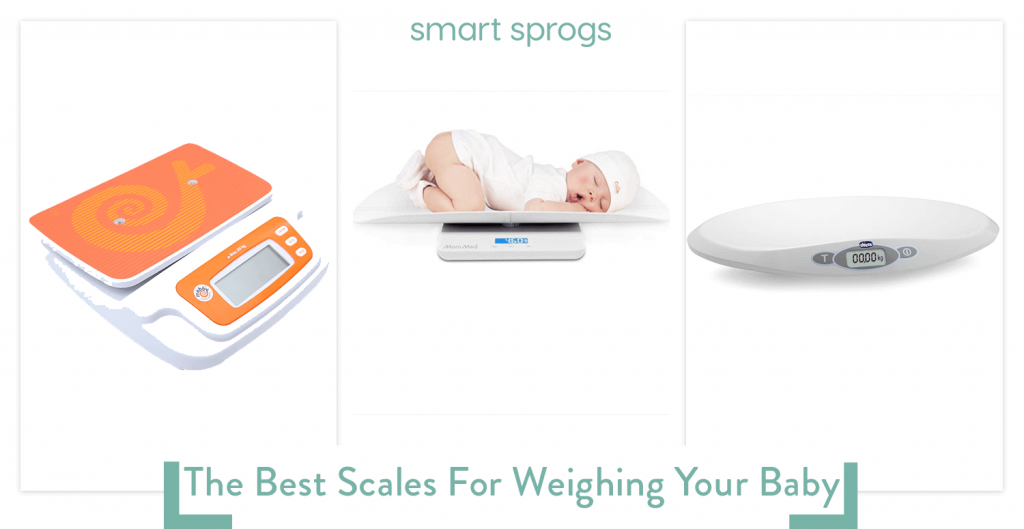
Feeding your baby, be it from the breast or bottle, and watching them grow into a contented and healthy toddler is one of the most satisfying aspects of being a parent or carer.
Providing food and nourishment for your offspring is a powerful instinct and weighing your baby is the most accurate way to enjoy watching the effects of your maternal or paternal efforts.
A shopping guide to the best baby weighing scales UK retailers sell
Do I need a baby scale?
Baby weighing scales can be expensive, so it’s worth pausing and deciding if they are worth buying. Here are a few reasons why it might be a good idea for your family.
- Was your baby early? It’s important to monitor the weight of an early baby. You can keep track of his progress and reassure yourself that all is well.
- Does your baby have a medical condition? Track your baby’s weight to make sure they are not losing weight as this can be an early sign that they are feeling unwell.
- Are you struggling to breast-feed? It’s understandable that a mother who is struggling to feed will worry about her baby’s weight.
- Does your baby have food allergies? Is your sicky baby receiving enough nourishment?
- Is your baby already considered to be underweight? Watch the numbers go up on your scales and be content that you’re doing all the right things for your little one.
How much should my baby weigh?
The average weight of a new-born baby UK midwives deliver is 7lb 60z for boys and 7lb 4oz for girls. It’s normal for a baby to lose weight in the days after birth, but most will be slightly over their birth weight at two weeks old.
The centile charts in your ‘Personal Child Heath Record’ (red book) are the key to tracking the healthy growth of your baby. If your child crosses two of the centile lines it’s worth getting in touch with your healthy visitor.
Where to weigh baby?
The question of ‘where can I weigh my baby near me?’ is an important one for new parents, especially if your child was born prematurely or has a medical condition.
A Baby Clinic at the Doctor’s Surgery
Baby clinics at the GP used to be a great way to meet new Mums and get your baby weighed. In times of Covid, this is a service that is sadly being restricted so check with your local surgery.
At GP appointments
Every time you take your small baby to the GP their weight will be checked as it’s a reliable method of checking that a child is developing correctly.
With the Health Visitor
Your health visitor will visit your home in the first few weeks of your child’s life, and they will bring a sophisticated baby weighing scale with them to check that your tiny tot is thriving.
Six months is another milestone when your baby’s weight will be checked by your health visitor.
During the pandemic, these visits may be less frequent that usual so check with your midwife as to what support to expect.
At Home
Buying a good quality and accurate set of baby weighing scales is a useful way of keeping a track of your little one’s progress.
Purchase your own and there will be no more worries about ‘Where can I weigh my baby’ between health visitor appointments and in these uncertain and socially distant times.
A Parent and Baby group
A set of baby scales have been permanent fixture in the corner of most baby groups for many years. If I’m honest, when my two were tiny I didn’t see a single parent use it! However, if you have concerns, it’s a convenient time to pop baby on and assuage your worries.
Just make sure your wipe the baby scale down with Covid fighting cleaning spray first, just in case!
With a Breast-Feeding counsellor
Weighing baby is a fantastic way to make sure they are receiving enough nutrition. If you have both struggled with breast-feeding your son or daughter may not be reaching those milestones. Don’t panic! You’ve done exactly the right thing by seeking help and lovely chubby cheeks and thighs will soon appear!
How to weigh a baby
Baby weighing can be tricky! Here’s a few tips to make it less stressful.
- Make sure your baby is well rested.
- Feed them a little before popping them on the weighing scales so they are full and happy.
- Try and weigh your baby without a nappy or clothing – you’ll get the most accurate reading. If this isn’t possible then use the ‘Tare’ button.
- Line the scales with a light muslin cloth or thin blanket to make sure it is not cold against their skin. Some scales with come with a towelling mat.
- Ask someone else to entertain baby will a toy above their face so they keep still.
- Be quick and don’t faff! Your baby will soon get chilly or bored.
-
The Best Reusable Baby Wipes
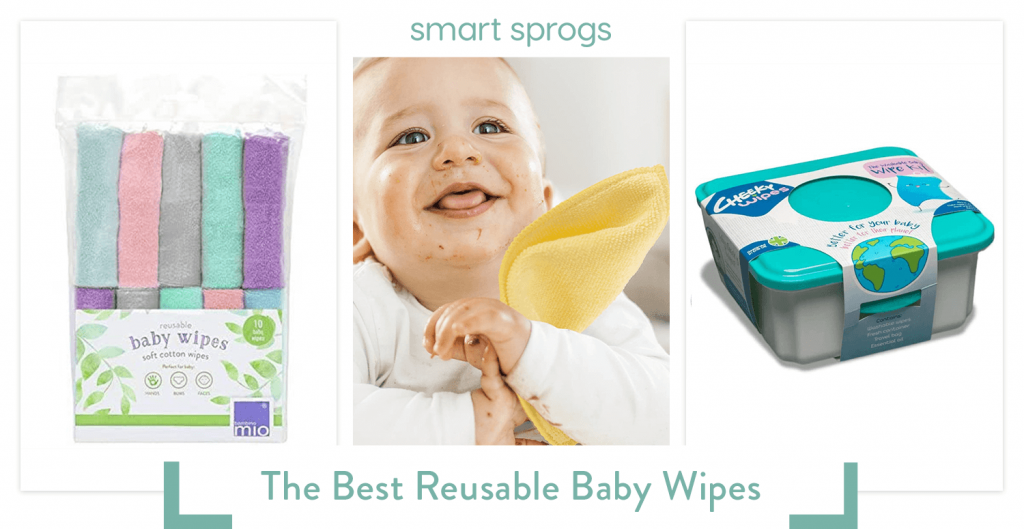
Washable baby wipes are the natural partner to reusable nappies. Money saving, eco-minded and skin friendly, what’s not to love?
A shopping guide to reusable wet wipes.
Why choose reusable baby wipes
The benefits for baby
Cloth wipes are great on sensitive skin as they are made from soft fabric which doesn’t contain the cleaning agents that disposable wipes do. Water and sweet -smelling essential oil are all that is needed.
Benefits for the carer
- Poo friendly – cloth wipes have more traction, so the first wipe is super-efficient at moving poo.
- Thicker – you’re not a parent if you’ve not has poo under your fingernail at least once but the thicker the wipe the less chance of unexpected holes!
- Time saving- a textured terry wipe will make short work of a nappy explosion, no more bored or cold wiggly babies to wrestle!
Money saving – it’s a no-brainer
- The average pack of good quality disposable wipes costs £2.50. If you are using two a week that’s £520 over two years.
- If you use £6.95 a pack eco conscious wipes that would work out at a ridiculous £1444.
- Now, imagine you’d had twins!
In comparison a starter kit of washable wipe plus accessories would cost around £60 and would last for two years at the very least.
Reduce your impact on the environment
Why are disposable baby wipes so bad for a planet that is already in crisis?
- Plastic Wipes are 80% plastic. These micro-plastics break up into even tinier fragments and scientists have discovered that they are entering the food chain, causing harm to creatures and polluting our seas and beaches.
- Packaging – few brands of wipes utilise recyclable packaging.
- Landfill – millions of non-biodegradable wipes end up amongst landfill each year, they will stay in the earth forever.
- Flushed wipes – not everyone understands that baby wipes must not be flushed down the loo so thousands of them are entering our water supplies, rivers and oceans.
Hint and tips on how to use reusable baby wipes
- Use a different colour for each job.
- You’ll need 20-40 cloth wipes.
- How to store reusable wipes? Purchase two different coloured storage tubs with lids one to keep clean wipes in and the other with soaking agent or essential oils in for dirties.
- Essential oils are lovely to use on your washables. Use soothing lavender for clean baby bum wipes and tea tree for the dirty ones.
- Buy a mesh bag to line your dirty tub so that wipes are easy to transport to the washing machine.
- A waterproof transport bag for at least 10 wipes is a good idea for your nappy bag.
- Wipes will shrink slightly when first washed.
How to clean reusable baby wipes
- If the wipes you use for poo are particularly grim, soak them in the bucket with your reusable nappies.
- Washable baby wipes are designed to go in the washing machine at 30-60 degrees.
- Many carers will just chuck a tub of washable wipes in with the rest of the wash, just as they would a baby grow that has been through a nappy explosion. This is completely fine!
- A hot wash every so often is prudent. It will refresh and remove any stains.
- No need to dry! Just put them back in the clean wipe box.
How to make reusable baby wipes
- Make your own cloth baby wipes with either cotton or bamboo fabric.
- Old T-shirts and towels would work well, just cut them to size.
- Alternatively, a pack of flannels would be a ready-made solution.
- For mealtimes just use water.
- For nappy changes use wipes that have been treated with a few drops of lavender oil or camomile tea.
-
The Best Nipple Shields for Breastfeeding
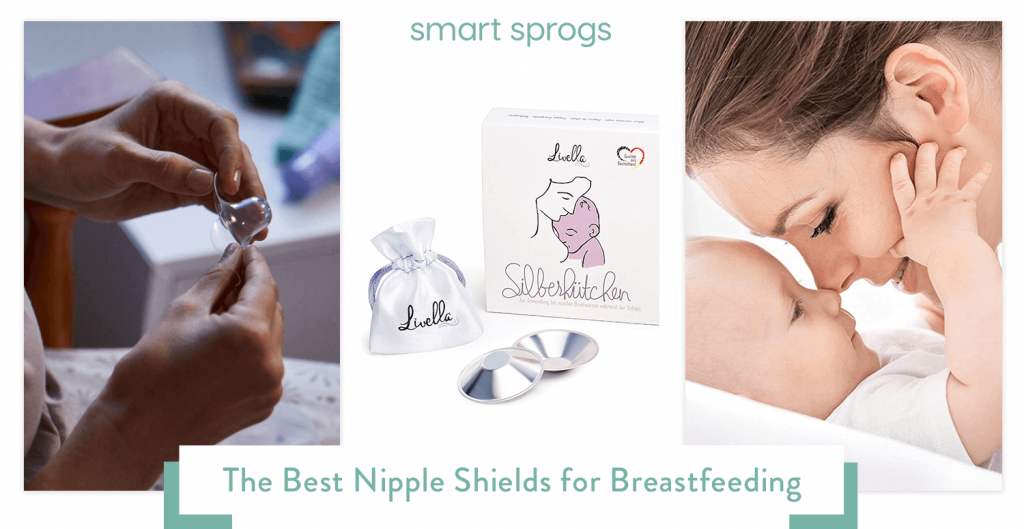
Sadly, breastfeeding has become a contentious issue for modern parents. The pressure to feed your baby yourself is high and the acknowledgment that breastfeeding can be super difficult is low.
If you are finding the whole process stressful then don’t be hard on yourself. Stay calm and try all the options but if it’s really not for you then you are no less of an amazing Mama!
That said, using nipple shields can be the miracle cure for a Mummy and tot who are struggling with breastfeeding and if you’re interested in the question ‘What are nipple shields and what can they do for us?’ then read on!
The best nipple shield for you – a shopping guide
Our comprehensive guide is based on personal experience and nipple shield reviews from across the nursery industry. Trust us to find you the best nipple shields on the available in the U.K.
What is a nipple shield?
Nipple guards are thin silicone teats that slip over a mother’s nipple to aid with breastfeeding and protect the delicate skin in that area.
Type of nipple shields
- Nipple shields for breastfeeding – help with a deep latch on and production of milk.
- Protecting nursing cups – they protect sensitive nipple tissue and already cracked skin as there is no direct contact between the broken breast skin and baby’s lips or clothing.
- Breast shells – collect milk and defend skin
- Nipple trainers – can be used before birth to encourage inverted nipples into a shape that will make breastfeeding easier.
It is important to use the correct type for your current needs.
How do nipple shields work?
- A breast shield, when it is the correct size, should slide comfortably over the nipple and sit against the areola.
- Small holes in the teat will provide the flow of milk as baby sucks.
- Your breastfeeding shield will be a noticeable, firm presence in the roof of your baby’s mouth. This will stimulate the suckle reflex and feeding will, hopefully, be easier and more effective.
- The silicone nipple cover will provide a barrier between your skin and anything that will irritate it, for example clothing or the insistent pull of your hungry infant.
Why you might need a nipple guard?
- If your little one is finding it difficult to breastfeed.
- You have flat nipples, inverted nipples or very soft boobs.
- Your baby has a problem with their tongue or mouth.
- Your baby was premature.
- Feeding has been established but baby is an inattentive feeder – a nipple guard will help them get more milk in a shorter time.
- If your need temporary respite from ‘touch’ on painful nipples.
How to use a nipple shield
Using a nipple shield is tricky! If you’re planning on trying breastfeeding nipple shields, then have a chat with your health visitor or breastfeeding counsellor.
Before you put on your nipple shield stretch it gently and warm it will warm water to make it a little tacky, this will help it stay in place.
A good trick is to almost turn the protector inside out and apply it first to the part of your boob that your baby’s lower jaw will touch.
Slowly and carefully pull it over your breast. It should be tight, and the nipple will extend into the teat but not necessarily touch the end.
The most important nipple shield breastfeeding techniques to master are positioning and attachment. A good ‘latch on’ will be comfortable for you and allow baby to end the feed contented and with a tummy full of milk.
If you squeeze a little milk into the end of the teat the smell and warmth will pique your baby’s interest and tempt them to begin their next yummy meal.
Remember, a breastfeeding nipple shield won’t magically take away the pain of sore nipples so keep using your nipple creams to moisturise and protect them.
How to choose the best nipple shield for your body
Material
A silicone nipple shield is the norm as it is easy to wear, comfy for baby and won’t ‘flavour’ your milk.
Nipple shield size
Women’s bodies are all different and the size of your nipple protector is vital. If you have large nipples and you’re wearing a Medela nipple shield small, then that is going to feel horrible!
A guide to the size of Medela breast shield you need will be in the product descriptions. Comfort is key!
The shape of your nipples
Nipple trainers are great for extending inverted or flat nipples while you’re still pregnant. However, you will need sturdier, larger breast shields while feeding so that they remain in place.
-
The Best Swimming Nappies
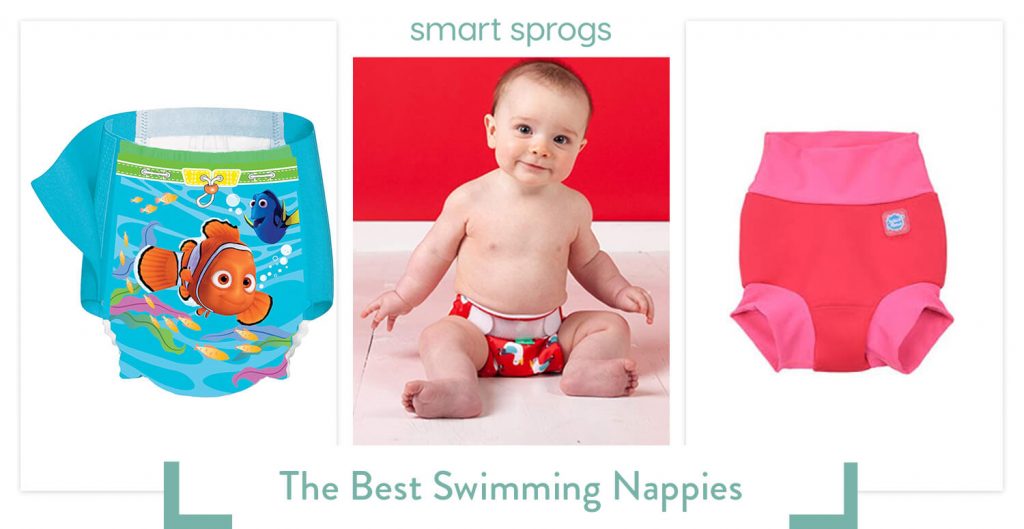
Taking your baby swimming for the first time is exciting! Their squeals of delight and joyous splashing will be moments to treasure forever.
If you’re planning a trip to the pool, going on holiday or joining a baby splash group then waterproof nappies are a vital part of your parenting kit. So, here’s a handy shopping guide to the swim nappies we love and trust.
Which swimming nappy should you buy?
We think that these are the best swim nappies available in the UK today. We hope you have oodles of fun trying them out!
Why is swimming so good for babies?
- It offers independence of movement before they can crawl or walk.
- It is a secure environment for them to test balance by bouncing and splashing. This helps with coordination out of the water too.
- Being in the pool will tire them out. Nap time for them and you!
- Exercise makes baby hungry so after a swim is a great time to try out new foods.
- Swimming will strengthen their heart and lungs.
- Arm, leg and neck muscles will be exercised and gain strength.
- Meeting other babies at a Water Babies session will aid social skills and their personality will develop quicker.
- Having fun with a carer in a warm environment with lots of skin-to-skin contact is a wonderful way to bond.
- Learning a new skill or just doing something completely out of their ordinary routine will build confidence and encourage your little one to try new things.
- Developing skills in the water early on will help them cope in any emergency situations in the water in later childhood.
So, pop a pack of nappies for swimming on your shopping list and make a date with the warm, shallow water of the baby pool.
The right time to take your baby swimming for the first time and other helpful tips
If your baby is healthy and happy and, if they were born premature, are now past their due date, you can take them swimming.
- It used to be the case that baby must have had their vaccinations to swim. So, if any Mums of older children are negative about your pool plans then this is likely to be where those worries come from.
- Make sure the pool is heated.
- Take it slowly and don’t spend too long in the water at first.
- Take a snuggly towel and have it ready for very soon after you both leave the water.
- Use water nappies – standard nappies will flood and then disintegrate.
- Baby swimming schools are happy to teach students from birth, so research classes in your area.
- Take a favourite bath toy to encourage your baby to play.
- Get yourself ready first and then dress your baby in their swimming attire.
Reusable swim nappies or disposable swim nappies?
The pros and cons of reusable baby swim nappies
- Washable swim nappies are better for the environment – used nappies aren’t recyclable so will go straight to landfill.
- If you’re keen swimmers, a reusable swimming nappy or two will save you money over the long term.
- Some washable nappies are tricky to roll down wet legs and if it’s dirty getting changed after swimming will be grim!
- Nappies that were designed to be used again tend to be softer on the skin.
- They are available in interesting colours and patterns.
The pros and cons of a disposable baby swim nappy
- Disposable swimming nappies can be worn under toddler swim pants or shorts and swimming costumes.
- A throw-away waterproof nappy will be easy to tear at the sides so getting changed and warm is wonderfully quick.
- They are a good choice for occasional use as they are cheaper per nappy.
- Disposal waterproof nappies are great for holidays abroad where you may not have access to a washing machine.
Choosing the size of your baby swimming nappies
Swim nappy sizes will differ depending on the brand and type.
- Disposable swim nappies will have sizes that relate to a child’s weight. For example, newborn swim nappies will be for babies that are 3-8kg (7-17Ibs).
- Reusable swim nappies will usually be sold in age ranges so a toddler swim nappy might be Sz 2-3 years.
- Remember, whether you’re buying swim nappy shorts for your one-year-old or a teeny tiny disposable, it needs to fit! So, take the unique shape and weight of your son or daughter into account.
Wondering how to tell if you have found the perfect fit?
- The nappy should be snug but not tight at the legs and midriff. If it leaves red marks you need to go up a size.
- You should be able to fit two flat and side by side fingers between the fabric and your baby’s skin.
- Don’t be tempted to go up a size so that your purchase fits for longer! The leak proofing will not work and that’s not a happy or hygienic occasion for anyone!
-
Guide to the Best Bottles and Teats for your Baby
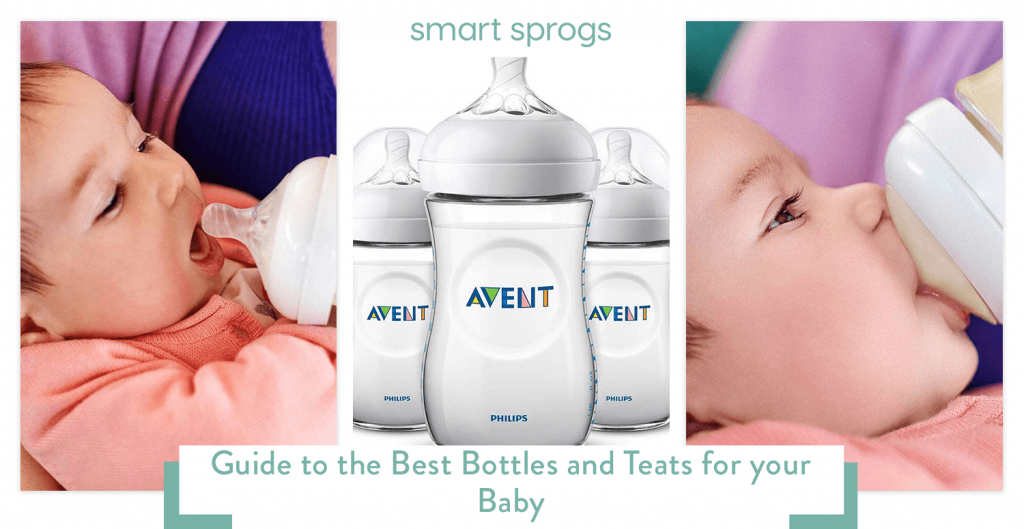
For a first-time parent, making the decision to use bottles to feed their baby can be empowering and a relief. It can also be overwhelming! There are so many options out there that choosing the right amount and type of kit is mind-boggling.
Never fear! As always, we’re here to help you! Our useful bottles for babies shopping guide will help you to decide which newborn teats to try and where to source the best baby bottles UK retailers sell. We will also answer the most common questions, from ‘How many bottles do you need for a newborn?’ to ‘How will I know when to change teat size?’.
The best teats and bottles for babies – a shopping guide
Types of babies’ bottles
Sizes of bottles
There are two main sizes of baby’s bottle and which one you use depends on the amount of milk your baby is drinking per feed.
- Newborn bottles will hold 150ml of breast or formula milk.
- A baby’s bottle for hungrier mouths will be 260ml in size.
Don’t be tempted to avoid buying newborn baby bottles of 150ml bottles because they won’t be used for long. They are the best newborn baby bottles as small amounts of milk will flow better out of them.
Anti-colic baby feeding bottles
The best anti-colic bottles have a dedicated preventative valve in the teat or body of the bottle. The key to minimising how much your baby suffers from painful colic is reducing how much air they swallow.
Bottles suitable for breastfed babies
Features of the best bottles for breastfed babies UK websites offer?
- Soft and smooth teats that are usually made from silicone.
- Ridges or petals at the base of the teat which will feel like a nipple.
- Wide neck teats that have a smooth curve. This will rest against your baby’s chin and mouth just as your boob would.
- Flow systems that will respond in the same way as a breast when baby sucks.
Self-sterilising bottles
Self-sterilisation is a feature that is quite new to the nursery market. So, how does it work? It’s super simple!
- Wash the bottle thoroughly.
- Put 20ml of water into the bottle.
- Pop it in the microwave for 3 minutes.
- Bing! The bottle is ready.
Easy grip bottles
As your baby grows, they will show more interest in feeding themselves. A bottle that has a hole in the middle and two handles is a fab way to encourage that independence.
These kinds of bottle are usually cheaper and will have fewer of the features such as anti-colic or teats shaped like a nipple.
How many baby bottles do you need?
How many baby bottles do I need? That is the ultimate question that a soon to be bottle feeding parent will ask. You will want enough for a day of feeds without needing to frantically wash and sterilise but not so many that you will waste money.
We recommend buying one bottle and teat of a particular type to test how your baby will respond. When my first child was tiny, she flatly refused to accept the first five kinds of bottle we introduced her to. There is no such thing as a bottle babies all love!
Once you have found a bottle and teat that your pride and joy will happily feed from, then follow these guidelines as to what to buy initially:
- At least six small baby bottles of 150ml capacity.
- At least six standard baby bottles of 260ml capacity.
- At least six slow flow baby bottle teats and four medium flow in case you have a hungry baby.
- A bottle cleaning brush.
- A steriliser to keep bottles safe and hygienic at each feed.
Types of bottle teats
Baby bottle teat sizes
Each size of teat will have a different number of holes in the tip to adjust the amount and speed of milk as it flows.
- Slow flow baby teats – 0+ months
- Medium flow teats for babies – 3+months
- Fast flow bottle teat – 6+ months
- Vari-flow teats that change their flow according to the strength of suck
Anti-colic
Teats for bottles that advertise themselves as ‘anti-colic’ will minimise any excessive mixing of air with the milk. Bubbles cause wind and that will leave your tiny tot with tummy ache and an upsetting need to burp!
A teat with a nipple shape and texture
For many babies, this style of teat increases acceptance and helps them to latch on just as they would during a breast feed.
- A bottle teat constructed from smooth and silky silicone.
- ‘Wrinkles’ at the bottom of the teat.
- A curve that will feel the same in baby’s mouth as Mum when they latch.
- A wide neck that will feel the same against a newborn’s lip and chin.
- Material that has the same flexibility as feeding from Mum.
‘Traditional’ teat shape – deliberately unlike a nipple
Some babies will struggle to accept the change from breast to the bottle. There are lots of bottles with teats that mimic the feel of a nipple but sometimes trying a teat that is totally different can be the key to success! If you’ve tried each and every bottle and your little darling still refuses, take one last shot and you might be surprised.
Material
- Silicone is durable but can be inflexible. Some companies such as Avent has developed a silicone that feels and acts the same as a woman’s nipple.
- Latex is usually soft and malleable. It’s a delicate material which is kind to a baby’s mouth. Latex teats will need to be replaced more often, especially when tiny teeth begin to develop.
- BPA free – BPA is the short form for a chemical that used to be present in lots of plastic products like baby bottles and toddler cups. It has been proven to be detrimental to the health of humans, especially infants and foetuses.
Signs that your baby need faster flow teat options
It’s easy to see when your baby is drinking from a teat that is too fast. They will splutter as the excess milk dribbles down their cute little chins. Wind and colic will also become a problem as they gulp more air.
So, when to change teats? A baby who needs a stronger flow of milk will grow frustrated during a feed.
Just because they are getting older doesn’t mean a baby needs to move up the bottle teat sizes. As with most aspects of parenting, take your cues from your son or daughter, they will tell you when to use size 2 teats on their bottles of morning milk.