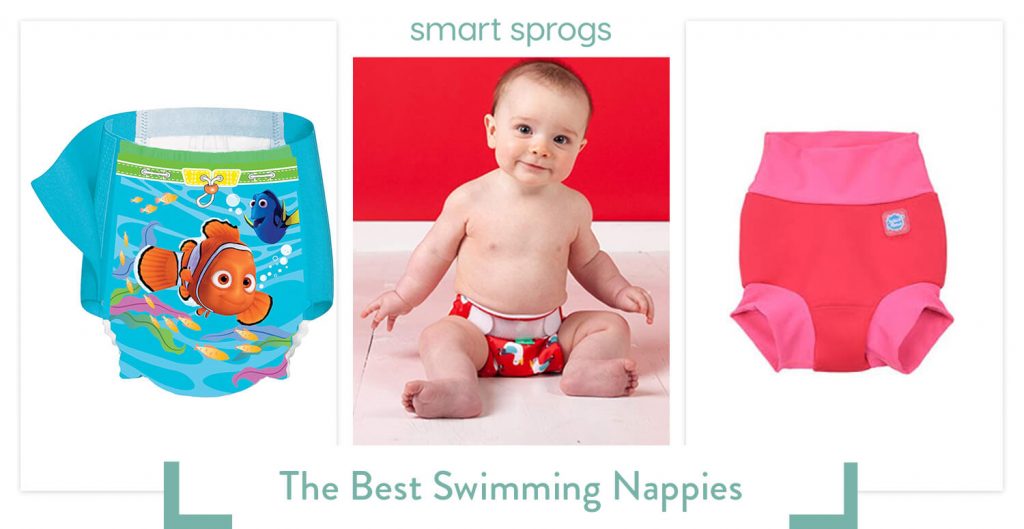
Taking your baby swimming for the first time is exciting! Their squeals of delight and joyous splashing will be moments to treasure forever.
If you’re planning a trip to the pool, going on holiday or joining a baby splash group then waterproof nappies are a vital part of your parenting kit. So, here’s a handy shopping guide to the swim nappies we love and trust.
Which swimming nappy should you buy?
We think that these are the best swim nappies available in the UK today. We hope you have oodles of fun trying them out!
Why is swimming so good for babies?
- It offers independence of movement before they can crawl or walk.
- It is a secure environment for them to test balance by bouncing and splashing. This helps with coordination out of the water too.
- Being in the pool will tire them out. Nap time for them and you!
- Exercise makes baby hungry so after a swim is a great time to try out new foods.
- Swimming will strengthen their heart and lungs.
- Arm, leg and neck muscles will be exercised and gain strength.
- Meeting other babies at a Water Babies session will aid social skills and their personality will develop quicker.
- Having fun with a carer in a warm environment with lots of skin-to-skin contact is a wonderful way to bond.
- Learning a new skill or just doing something completely out of their ordinary routine will build confidence and encourage your little one to try new things.
- Developing skills in the water early on will help them cope in any emergency situations in the water in later childhood.
So, pop a pack of nappies for swimming on your shopping list and make a date with the warm, shallow water of the baby pool.
The right time to take your baby swimming for the first time and other helpful tips
If your baby is healthy and happy and, if they were born premature, are now past their due date, you can take them swimming.
- It used to be the case that baby must have had their vaccinations to swim. So, if any Mums of older children are negative about your pool plans then this is likely to be where those worries come from.
- Make sure the pool is heated.
- Take it slowly and don’t spend too long in the water at first.
- Take a snuggly towel and have it ready for very soon after you both leave the water.
- Use water nappies – standard nappies will flood and then disintegrate.
- Baby swimming schools are happy to teach students from birth, so research classes in your area.
- Take a favourite bath toy to encourage your baby to play.
- Get yourself ready first and then dress your baby in their swimming attire.
Reusable swim nappies or disposable swim nappies?
The pros and cons of reusable baby swim nappies
- Washable swim nappies are better for the environment – used nappies aren’t recyclable so will go straight to landfill.
- If you’re keen swimmers, a reusable swimming nappy or two will save you money over the long term.
- Some washable nappies are tricky to roll down wet legs and if it’s dirty getting changed after swimming will be grim!
- Nappies that were designed to be used again tend to be softer on the skin.
- They are available in interesting colours and patterns.
The pros and cons of a disposable baby swim nappy
- Disposable swimming nappies can be worn under toddler swim pants or shorts and swimming costumes.
- A throw-away waterproof nappy will be easy to tear at the sides so getting changed and warm is wonderfully quick.
- They are a good choice for occasional use as they are cheaper per nappy.
- Disposal waterproof nappies are great for holidays abroad where you may not have access to a washing machine.
Choosing the size of your baby swimming nappies
Swim nappy sizes will differ depending on the brand and type.
- Disposable swim nappies will have sizes that relate to a child’s weight. For example, newborn swim nappies will be for babies that are 3-8kg (7-17Ibs).
- Reusable swim nappies will usually be sold in age ranges so a toddler swim nappy might be Sz 2-3 years.
- Remember, whether you’re buying swim nappy shorts for your one-year-old or a teeny tiny disposable, it needs to fit! So, take the unique shape and weight of your son or daughter into account.
Wondering how to tell if you have found the perfect fit?
- The nappy should be snug but not tight at the legs and midriff. If it leaves red marks you need to go up a size.
- You should be able to fit two flat and side by side fingers between the fabric and your baby’s skin.
- Don’t be tempted to go up a size so that your purchase fits for longer! The leak proofing will not work and that’s not a happy or hygienic occasion for anyone!
Leave a Reply