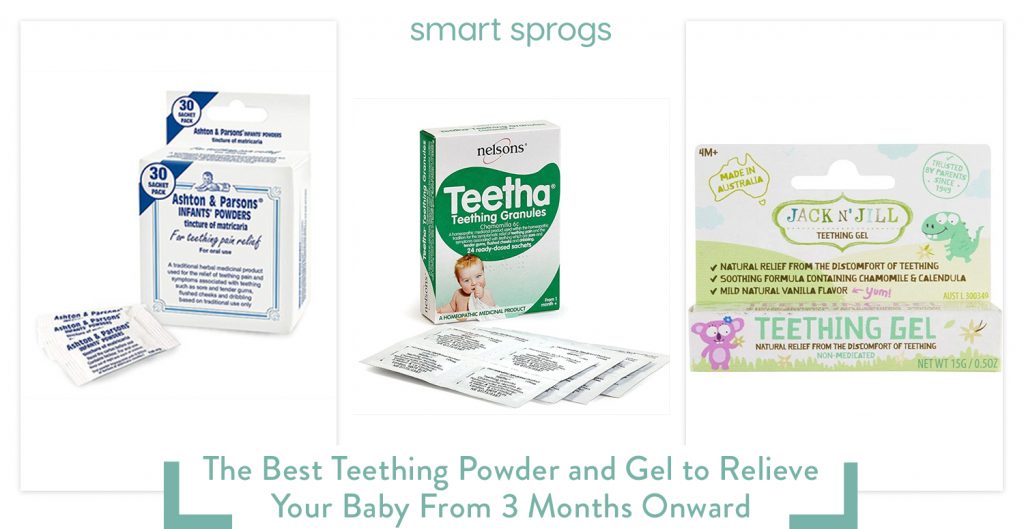
Teething can be a distressing time for babies and their loving parents. It’s a completely natural and vital process that every human goes through, but teething symptoms will still cause pain and discomfort.
Happily, we’re here to help! Our guide will help you cope by providing teething tips for pain relief, it will answer the question of when do babies teeth and provide recommendations for the best teething gel for baby.
Choosing the correct teething treatment for your baby
There are lots of teething remedies out there, all promising to make your little one a little less sad. From teething gel to powders and granules, here’s our pick of the best.
Baby teething powder or teething gels – which is the best teething medicine?
Which is the most effective treatment for teething symptoms in babies? Teething powder or teething gels? Most Mums and Dads simply use the teething relief that has been recommended by family and friends but here’s a quick guide to the differences and how they should work.
Teething powders/ Teething granules
The best teething powder should do the following:
- Dissolve quickly
- Taste nice
- Be effective
- Contain only natural ingredients
- Be sugar free
Teething powder for babies come in sachets with small amounts of powder that should be spooned or poured into your baby’s mouth. They will provide pain relief and/or have a numbing effect.
Teething aids in the form of gel
A good teething gel needs to have these attributes:
- Fast and reliable pain-relieving properties
- Be sticky enough to stay in place without feeling unpleasant
- Tasteless or with a pleasant flavour
- Be sugar free
- Contain under 1% of Lidocaine (the active ingredient)
When do babies start teething?
We say this frequently, but all babies and children are different, so the answer to ‘When does teething start?’ is an approximation.
Seeing the first symptoms of teething at 3 months is quite usual but the first tooth won’t pop through until around 6-months of age.
The last tooth will have appeared by 3 so, potentially, that’s quite a few days and weeks of cutting teeth to suffer in your child’s first years. That’s why it’s important to learn how to help a teething baby.
Signs of teething in babies
The signs of teething can appear as early as 8 weeks but it’s normally at 12 weeks plus. Here’s a list of the main baby teething symptoms to look out for:
- One of the first sign of teething is lots of drooling so buy lots of bibs!
- Biting and gumming on EVERYTHING! They do this because the counter pressure gives relief
- Red cheeks
- Waking up at night
- A baby teething will feel grumpy and irritable so prepare yourself for more crying and temper tantrums than usual
- Red gums
- Being off their food
- Ear rubbing – one of classic signs baby is teething but if it continues check that it isn’t the symptom of an ear infection
Teething help – what to do for your teething baby?
Baby teething tips can make your grouchy baby smile again so read on!
- Teething pain relief such a Calpol or Nurofen for babies can be taken to help reduce a temperature and ease soreness.
- Baby teething pain relief such as teething gel or teething powders
- Massaging your baby’s gum will alleviate the pressure of a tooth coming through
- Teether dummies and toys are a safe way to indulge their urge to bite
- Cold, damp flannels make a great homemade teether
- Cold food and drink have a useful numbing effect