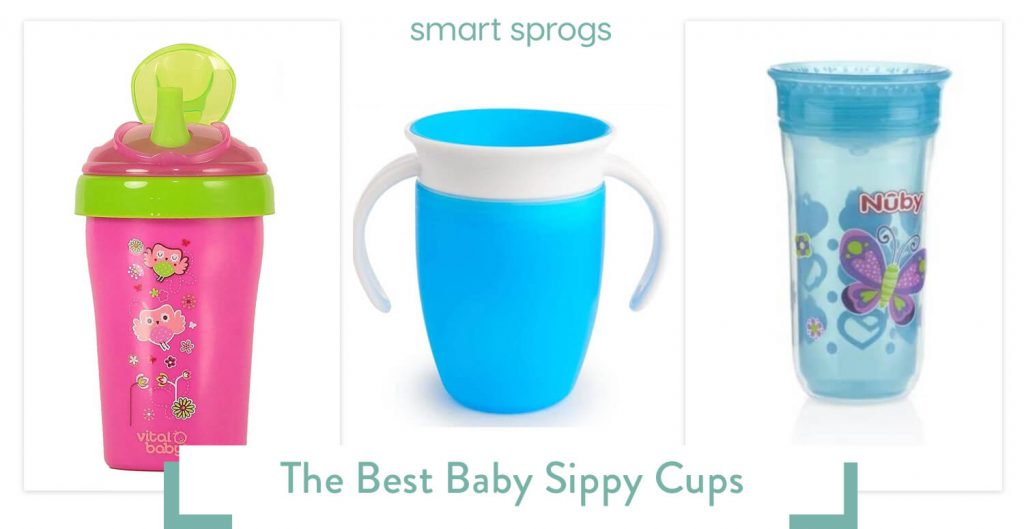
There is a huge range of spill-proof beakers for babies on the UK market, from a jolly cow print toddler milk cup to a clever baby sippy cup that can be sipped from any part of the lid.
Our comprehensive guide on everything from when to introduce independent drinking to how to reduce the mess at juice time will be a huge help to any parent of a young baby or toddler.
A shopping guide to the best baby cup options
As your tiny helpless bundle grows and develops, there are so many decisions that need to be made! Our shopping guide on training cups for toddlers and the best baby sippy cup should help you make an informed choice.
Best small baby training cup
Best baby sippy cup for 6 months plus
Best toddler cups
When can babies start to drink independently?
The transition from a bottle or breast to a cup is a big milestone in the short life of a little one. It can be a stressful business with lots of mess and the trialling of many different types of cup.
Medical practitioners recommend that children should be drinking exclusively from a cup by 18 months. Why?! Drinking regularly from a spout or straw can cause issues with natural mouth and dental development.
When baby has head and neck strength, at three to four months, they can start to experiment with weaning cups or a feeder cup.
Non-spill cups or sippy cups with handles are a great next option as an older baby of six months and over becomes able to bring it to their mouth.
You might have to experiment with several kinds of baby drinking cups throughout the infant and toddler stages, each baby will prefer a different way to drink their milk.
Types of toddler and baby drinking cup
A first sippy cup will be very different from beakers for toddlers – here are a few of the main differences.
Baby feeding cup for 4-6 month olds
Cup use is optional at this age but practising the art of drinking from a cup is a wise idea.
- Soft spouts
- Usually handle-less as Mummy or Daddy are in control
- Low capacity
- Use as a baby water cup as not much actual drinking will be done
- Babies should always be supervised with a milk or water beaker
Non spill baby cup – 6-12 months
Choosing a baby milk cup for older babies will reveal more options
- Spout cups
- Spout less cups
- Cups with straws
- Larger capacities
- Handles
- Baby still needs supervising with a drink until they are 12 months old
No spill cups for toddlers – 12-18 months
These will usually have the same features as a non-spill cup for younger babies.
- Handle-less
- Curved or hourglass shaping for easy grip
- Larger capacity
- Funky designs
Straw cups for toddlers -12-18 months
Toddler beakers with straws – an ace idea for travel.
- A straw beaker will have a large capacity
- Robust straw system that will have a flip lid
- Tricky to clean
- Shatterproof BPA free plastic
Free flow cups for toddlers – 18 months plus
A free flow baby cup will be robust and is the stage after needing to ‘suck’ at the cup to release fluid.
- A free flow cup without valve mechanisms is easier to clean
- A free flow sippy cup may have some form of spout or lid but will need to be tipped to drink.
- Free flow toddler beakers are best for home as they are not spill proof
Toddler bottles
A toddler milk bottle is an excellent idea for children who struggle with the transition from drinking their bedtime milk from a cup.
Children’s drinking cups
- Kids beakers will be robust and durable
- Kids drinking cups will come in fun designs to encourage regular hydration
Choosing the right cup – useful features
Spout less
According to dentists the best baby cup is one that has no spout, so look for a first cup that will introduce drinking from open cup at a very young age. The Doidy cup is a design that has been popular with parents for 80 years.
Non spill without a spout
Most families will enjoy happy days out and holidays together, so a non-spill cup with some form of lid is necessary. Both Nuby and Munchkin have developed a sippy cup for milk, water and juice that is dentist approved but also provides mess free hydration.
Soft spout sippy cup
Do you have a baby who insists on sucking when drinking? That’s ok, there are plenty of cups for babies that feature a soft spout that has less impact on tiny teeth, mouths and gums.
Free flow toddler cups
A free flow beaker is for toddlers who have good hand to eye co-ordination and motor skills. Effectively, a free flow cup is one that has some form of leak proof lid and releases liquid when the child tips their head and the cup back to drink.
Handles or a grippy surface
As your baby grows into a toddler, they will have less need for and patience with handles. The best cups for a 1 year old will have removable handles.
Helping your baby to drink by themselves
Baby’s first cup will hold around 100ml and you’ll be in control. With time, patience and experimentation they will soon be happily glugging their morning milk on their own.
Start early
A weaning cup can be used from 3-4 months of age
Chill out
Don’t stress! Every baby is different
Easy to hold handles or a grippy surface
These make it easier for your little one to drink independently
Spills are inevitable
Even if you choose a non spill sippy cup there will be times when you haven’t put the lid on properly or it gets launched across the room.
Minimising mess
Choose the right cup for the right time
The best sippy cup for milk at bedtime is one that won’t leak when it’s abandoned at the bottom of the cot.
Non-spill
A no spill sippy cup will make you life a million times easier. Your changing bag, carpet, sofa and clothes will thank you for it.
Use bibs and splash mats
Even a non spill beaker has its limitations! Bibs and splash mats are essential at meal and snack times.
Don’t leave your baby or toddler alone
A toddler cup will need to stand up to rigorous testing and the increasing cleverness of your child. One day they will suddenly discover how to get the lid off their toddler beaker and juice will go everywhere!!
Use a cup with handles or easy grip when out and about
A trophy baby beaker is one that has wide, easy grip handles on each side. It will be easy for your babe to hold and tip.
Leave a Reply