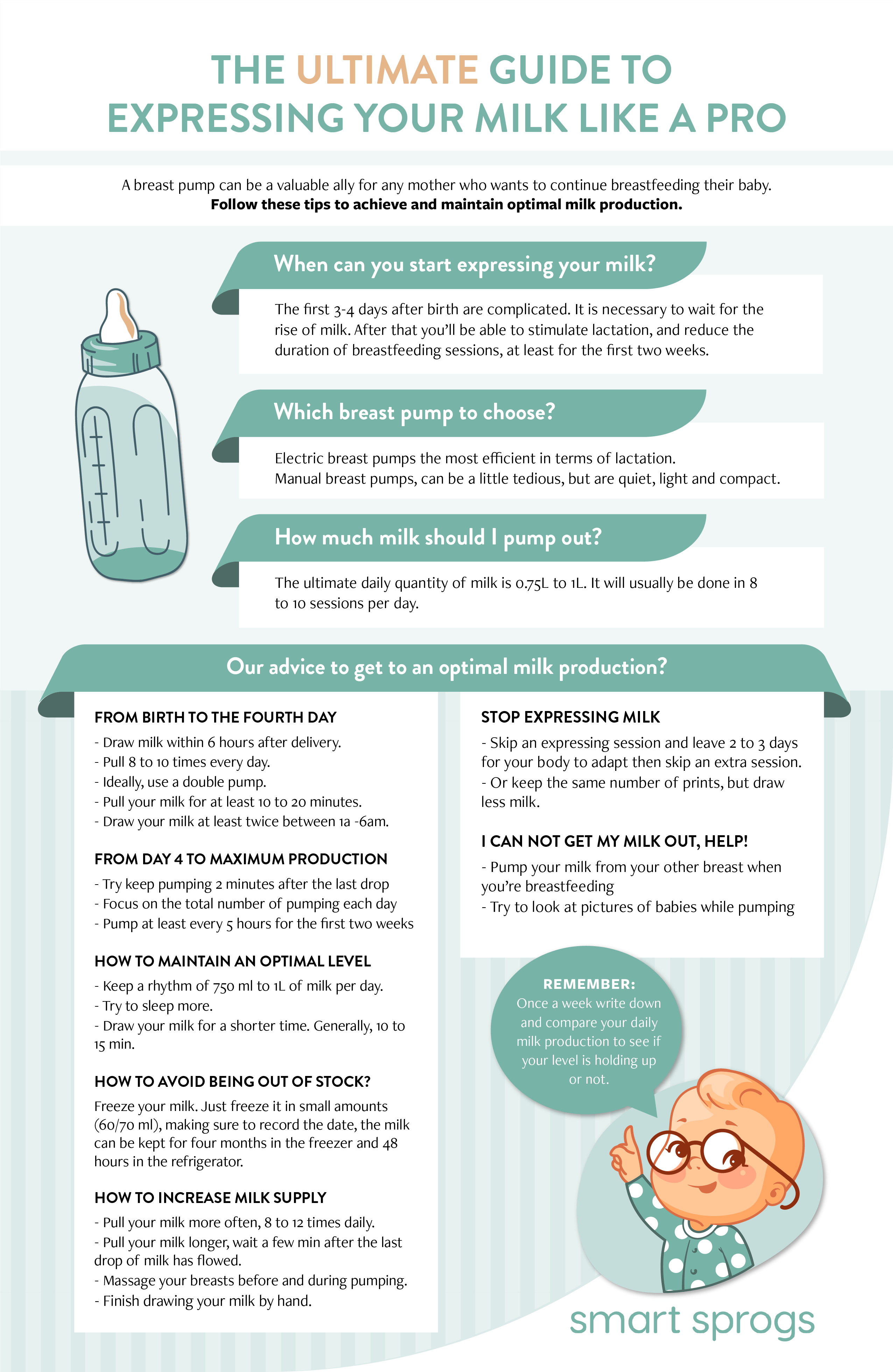
A premature baby or they are not able to suck, you want to go back to work or simply need to take a break … a breast pump can be a valuable ally for any mother who wants to continue breastfeeding their baby.
Follow these tips to achieve and maintain optimal milk production.
- When can you start expressing your milk?
- Which breast pump to choose?
- Could my baby end up preferring the bottle to my boob?
- Our advice to get to an optimal milk production?
- From birth to the fourth day
- From day 4 to maximum production
- Maintain an optimal level
- How to avoid being out of stock?
- Increase milk supply
- How to stop expressing milk
- I can not get my milk, who can help me?
When can you start expressing your milk?
From day one. I’m not going to lie the first three / four days after birth are complicated, the extraction of colostrum with a breast pump is not done well. It is necessary to wait for the rise of milk.
The breast pump can then be useful for babies born before term or low weights that do not always have the energy to suck. With a breast pump, you’ll be able to stimulate lactation so that your baby makes less effort to suck the milk out, and reduce the duration of their breastfeeding sessions, at least the first two weeks.
Which breast pump to choose?
Electric pumps, manual pumps, double pumps…There are many models of breast pumps, each with their own strengths and weaknesses.
Electric breast pumps are the most used as they are the most efficient in terms of lactation. The latest generation of breast pumps even offer a double or simple pumping, they are at once small, silent and painless.
As for manual breast pumps, they can be a little tedious, because you have to pump the milk by hand, but they have the merit of being quiet, light and compact.
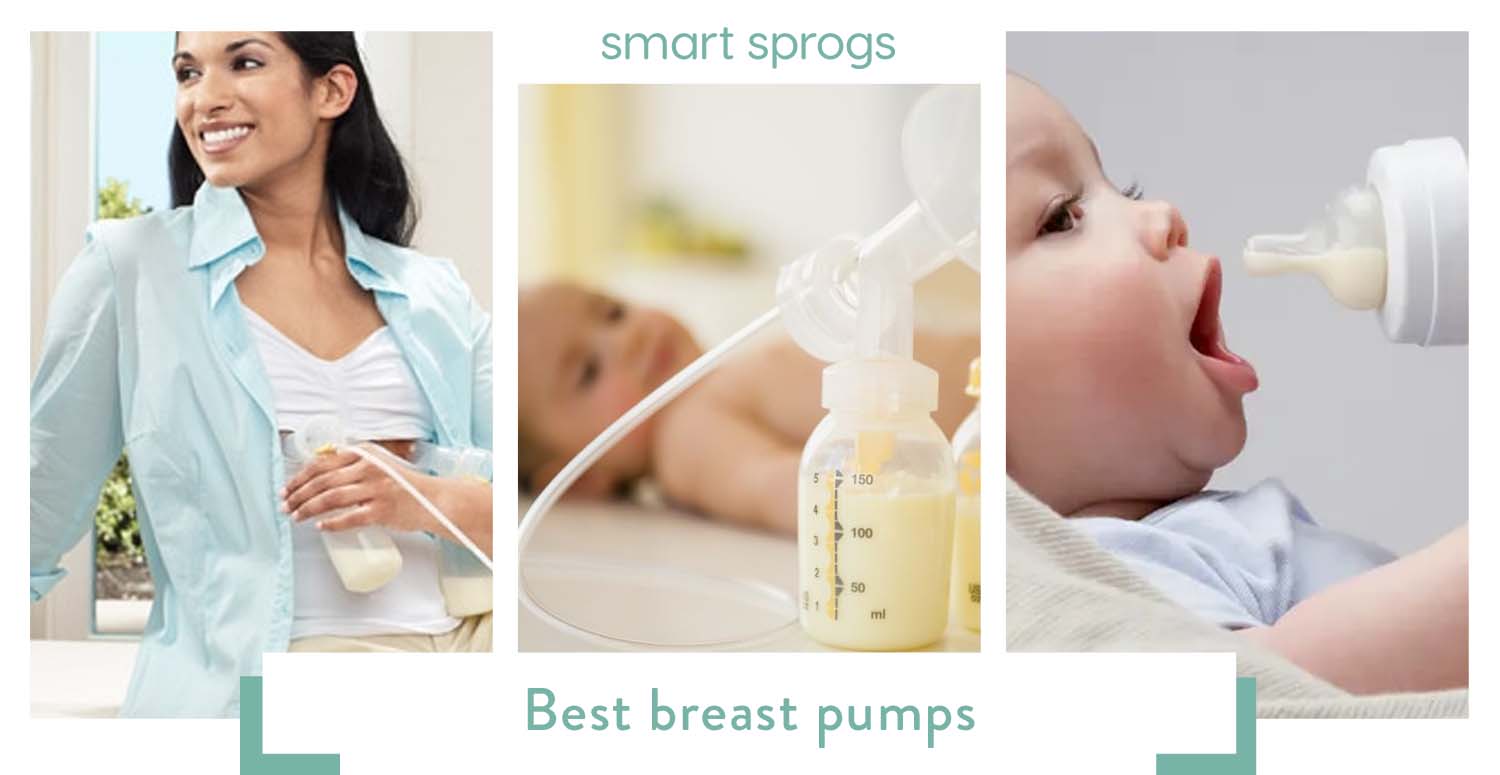
In any case, the most important thing is to find the pump that best suits your needs, your living environment, your milk production, the needs of your infant and your budget. Our guide on the best breast pumps should allow you to choose the one that suits you best.
Could my baby end up preferring the bottle to my boob?
It can be a thought that scares you if you intend to keep breastfeeding directly from the source.
Long story short, it’s highly unlikely.
On the contrary when your baby grows they might start refusing the bottle. They won’t want to take the bottle and not the boob, while he is in contact with your breasts still full of milk.
If it’s the case and you want to give him a bottle, it is then preferable that the bottle is given by someone else than yourself, even more efficient if it’s a third person external to your household.
Our advice to get to an optimal milk production?
Drawing milk frequently sends a strong signal to the body so that it produces more milk … The more often you empty your breasts, the more milk they will produce.
From birth to the fourth day
If you can, draw milk within 6 hours after delivery. Use a hospital breast pump at the beginning to produce a lot of milk. You’ll produce a little colostrum at the beginning
As soon as possible, pull 8 to 10 times every day. This is the number of times your baby would be breastfeeding each day. In any case, the more you shoot each day, the more milk you will produce. The opposite is also true, the less you shoot and the less milk you produce.
If you can, use a double pump. It will save you time and boost production faster.
Pull your milk for at least 10 to 20 minutes then finish by massaging your breasts by hand. Use the cushion to harvest the milk that will come out thanks to the manual massage.
To increase milk production, try to draw your milk at least twice between 1am and 6am. In the early hours of the morning, the level of hormones that produce milk increases!
From day 4 to maximum production
At the end of the 4th day, you should almost reach an optimal level by making the following changes:
Draw your milk longer, try keep pumping 2 minutes after the last drop of milk or until your breasts feel completely empty.
Focus on the total number of pumping each day (8 to 10 times every 24 hours) rather than the time between each draw (every 2 to 3 hours). However you should not let more than 5 hours go by without drawing your milk for the first two weeks of your baby’s life.
Maintain an optimal level
When you reach the 750 ml to 1L daily level, you’ve reached your goal! Most mums can now draw less times while maintaining this volume of production.
My advice for this phase:
- Keep a rhythm that gives 750 ml to 1L of milk per day
- To maintain your maximum production level, you must try to sleep more. The majority of mothers draw milk before going to bed and then in the morning when they wake up … Try to do the same and analyze if it does not cause clogging or if it does not diminish your milk production
- Draw your milk for a shorter time. Generally, 10 to 15 minutes are enough.
- Once a week, total the milk you have shot in the last 24 hours. Write it down and compare weekly to see if your level is holding up or not.
How to avoid being out of stock?
Nothing will ever replace your baby sucking, it’s always more effective than a breast pump. To fill a bottle of 200 ml, it is necessary to pump at least two or three times.
So it becomes a question of organization. If you’re going to rely more heavily on bootle feeding, you should start to freeze your milk. Just freeze it in small amounts (60/70 ml), making sure to record the date, the milk can be kept for four months in the freezer and 48 hours in the refrigerator.
If you do it regularly, you’re sure to always have some milk available for the days you can’t breastfeed.
Increase milk supply
If you need to increase milk production, the faster you work, the sooner you will have results. Here are some things to try:
- Pull your milk more often, 8 to 12 times every 24 hours
- Pull your milk longer, wait a few minutes after the last drop of milk has flowed
- Make sure the cushion for your nipple still fits, the size may change over time
- Massage your breasts before and during pumping
- Finish drawing your milk by hand
Stop expressing milk
When you have decided to quit drawing milk, it is important to remember to go step by step. Follow these tips for a safe stop:
- Skip an expressing session and leave 2 to 3 days for your body to adapt and skip an extra session. In the end, you should only keep the first and last pumping of the day before stopping completely.
- Keep the same number of prints, but draw less milk. For example, if each draw gave you 120 mL of milk, stop now at 90 mL. Allow two or three days for your body to adjust and then lower again. After a while, you will not feel the need to draw your milk.
Remember that in the “weaning” phase, if your breasts are too full, just pull what you need to make you feel good again. Leaving your breasts too full can expose you to pain and infection.
I can not get my milk, who can help me?
Don’t get too hard on yourself. There’s got to be a solution.
Try to pump your other breast while breastfeeding. If you need to express your milk without breastfeeding, try looking at baby pictures while doing it.
If none of it works, ask your GP for advice. You can also find a lactation consultant here.
Finally there are also some women that sell their milk online. It’s kind of a last resort solution but it could solve your problem.
If you need to talk we’re here. Message us, comment here and we’ll try to help you and share our experience as best as we can.